
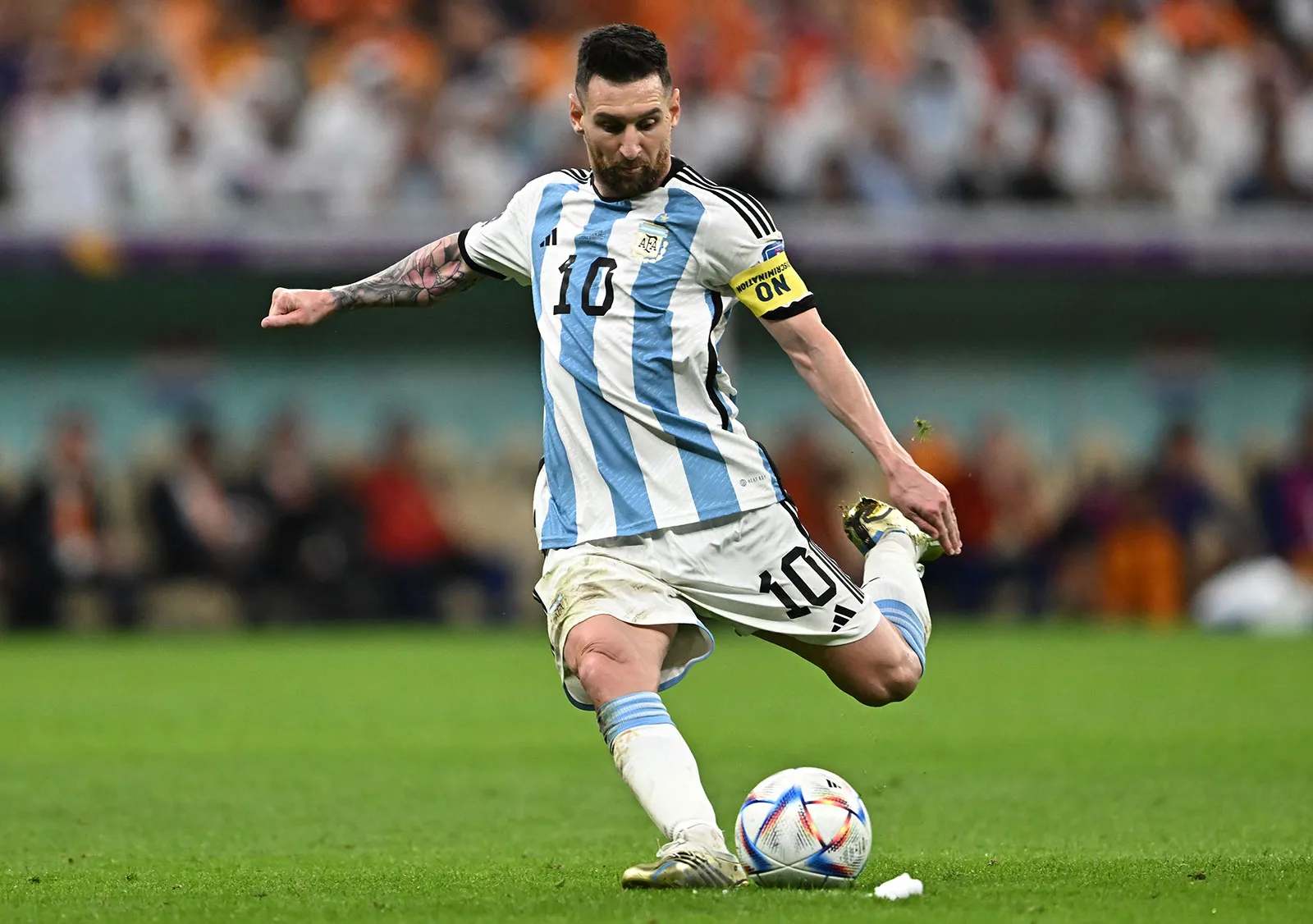
Lionel Messi has announced his retirement from the Argentina national football team, bringing an end to one of the most extraordinary international careers in the history of the sport.
The Argentine superstar, World Cup champion in 2022 and a finalist in 2014 and 2026, revealed that he had made the decision on July 21, two days after Argentina’s defeat to Spain in the 2026 World Cup final. He explained that the decision became even clearer following the death of his father.
Messi shared an emotional letter announcing his farewell and later published a deeply personal video to mark the end of his journey with the national team.
Messi: “I Have Nothing More to Give”
In his farewell message, Messi described his decision as painful but necessary. After more than two decades representing Argentina, the 39-year-old captain said he felt it was time to close one of the most important chapters of his life.
“It was a decision that hurt and still hurts deeply, but I understand that the time has come,” Messi wrote.
The Argentine icon emphasized that he had always given everything for the national team, not only during the successful years but throughout his entire international career.
“I love, loved and will always love being with the national team. I gave everything I had, I have nothing more to give, and there are also very talented young players coming through who deserve their opportunity,” he said.
Messi also thanked Argentine supporters for their affection throughout his 20 years with the senior national team.
“I am going to miss hearing you from inside the team. Now I will be one of you, supporting and cheering from the outside, in good times and bad times, even more so,” he added.
An International Career Spanning More Than Two Decades
Messi’s international career began in controversial fashion on August 17, 2005, when the then-18-year-old forward made his senior debut against Hungary in Budapest.
He entered the match as a substitute but was sent off just 40 seconds later after the referee interpreted an incident as an elbow.
That unusual beginning quickly became a footnote in what would become an extraordinary career.
Before establishing himself with the senior team, Messi had already demonstrated his enormous potential at youth level. In 2005, he led Argentina to the FIFA U-20 World Cup title in the Netherlands, finishing as the tournament’s top scorer with six goals and winning both the Golden Boot and Golden Ball.
His first senior international goal came on March 1, 2006, against Croatia.
Only three months later, Messi appeared at the 2006 FIFA World Cup in Germany. He became Argentina’s youngest player to represent and score for the country at a World Cup when he came off the bench against Serbia and Montenegro.
From Heartbreak to World Champion
For many years, Messi’s relationship with the Argentina national team was defined by spectacular individual performances followed by painful defeats in major finals.
Argentina reached the 2007 Copa América final, where it lost to Brazil. Messi, only 20 years old, was named the tournament’s best young player.
He later won Olympic gold with Argentina at the 2008 Beijing Games, adding another major international achievement to his growing résumé.
After becoming Argentina’s captain in 2011, Messi led the team to three consecutive major finals.
The first came at the 2014 FIFA World Cup in Brazil. Argentina reached the final at Rio de Janeiro’s legendary Maracanã Stadium, where Germany won 1-0 in extra time thanks to Mario Götze’s 113th-minute goal.
Despite the defeat, Messi was awarded the World Cup Golden Ball as the tournament’s best player.
The disappointment continued at the 2015 Copa América in Chile. Argentina reached the final but lost to the host nation on penalties after a goalless draw.
A year later, the same scenario unfolded at the Copa América Centenario in the United States. Argentina again lost to Chile on penalties, with Messi missing his own spot kick.
That defeat led to one of the most dramatic moments of his international career.
Messi’s First Retirement — and His Return
Following the 2016 Copa América final, Messi announced his retirement from international football.
“For me, the national team is over. That’s it. Four finals, I tried. It hurts not being champion,” he said at the time.
The announcement shocked Argentina and triggered an enormous public campaign asking him to return.
Only weeks later, Messi reversed his decision.
“I thought about many things the night of the final and seriously considered leaving, but I love this country and this shirt too much,” he explained.
His decision to continue ultimately changed the course of Argentine football history.
The Beginning of the Golden Era
The 2018 World Cup in Russia was another difficult chapter. Argentina reached the round of 16 but was eliminated by France, while Messi scored only once during the tournament.
The team subsequently underwent significant changes, with Lionel Scaloni becoming the central figure in a new generation.
Scaloni, alongside former Argentina international Pablo Aimar, helped convince Messi to remain part of the project and embrace a period of renewal.
That decision would eventually produce the most successful era in Argentina’s modern football history.
On July 10, 2021, Argentina defeated Brazil 1-0 at the Maracanã Stadium to win the Copa América.
Ángel Di María scored the decisive goal, while Messi finally lifted a major international trophy with the senior national team after 16 years of trying.
The victory ended Argentina’s long wait for a major senior men’s international title and represented a defining moment in Messi’s career.
Qatar 2022: The Ultimate Prize
If the 2021 Copa América ended one chapter of frustration, the 2022 FIFA World Cup in Qatar completed Messi’s international legacy.
Argentina began the tournament with a shocking defeat to Saudi Arabia but recovered spectacularly.
Messi scored seven goals and provided three assists throughout the competition, playing a decisive role in Argentina’s run to the final.
Against France in the final, Argentina eventually prevailed in one of the most dramatic matches in World Cup history.
Messi scored twice during the match and converted his penalty during the shootout as Argentina won the World Cup.
He was awarded the Golden Ball for the tournament, becoming the first player in history to win the award twice, having also received it in 2014.
For Messi, it was the trophy that had eluded him for most of his career.
Finalissima and Copa América 2024
Argentina’s success continued after the World Cup.
In June 2022, the national team defeated Italy 3-0 at Wembley Stadium in the Finalissima, the match between the champions of South America and Europe.
Two years later, Argentina successfully defended its Copa América title.
The 2024 tournament added another major trophy to Messi’s international résumé and strengthened Argentina’s status as the dominant national team of the era.
His Final World Cup in 2026
The 2026 FIFA World Cup, hosted by the United States, Mexico and Canada, became Messi’s sixth and final appearance at football’s biggest tournament.
According to the statistics accompanying his farewell, Messi scored eight goals and registered four assists during the competition.
His performances placed him second in the tournament’s scoring chart behind Kylian Mbappé.
Messi also surpassed Miroslav Klose’s previous World Cup scoring record during the tournament, although Mbappé eventually moved ahead of him.
Messi finished his six World Cup appearances with 21 goals, making him the second-highest scorer in World Cup history.
Argentina ultimately reached the final against Spain. The defeat proved to be the final match of Messi’s international career.
Historic Numbers with Argentina
Messi leaves the Argentina national team with statistics that underline the extraordinary scale of his career.
According to the figures released with his retirement announcement, he finishes with:
- 207 appearances
- 125 goals
- 68 assists
- World Cup champion in 2022
- Copa América champion in 2021 and 2024
- Finalissima champion in 2022
- Olympic gold medalist in 2008
- U-20 World Cup champion in 2005
His 207 appearances make him Argentina’s most-capped player, while his 125 goals make him the country’s all-time leading scorer.
His 68 assists also represent a national-team record.
After years of criticism, heartbreak and questions about whether he could deliver a major trophy for Argentina, Messi leaves the national team having achieved virtually everything possible.
“Thank You, God, for Making Me Argentine”
Messi’s farewell message was not simply a statistical summary of his career. It was also a deeply emotional goodbye to the supporters who followed him from his teenage debut to his final World Cup.
He thanked his family, coaches, teammates and officials who accompanied him throughout the journey.
“I leave with the peace of mind and pride of having given you, together with my teammates, moments we dreamed of,” Messi wrote.
“It was crazy to experience it with you. I love you.”
He ended his message with a sentence that perfectly captured his connection with his homeland:
“Thank you, God, for making me Argentine. Let’s go Argentina!”
Messi later clarified that he had actually written the farewell letter on July 21, two days after the World Cup final against Spain.
But the death of his father made him even more certain that retirement was the right decision.
The End of the Messi Era with Argentina
Messi’s decision marks the end of an era for the Argentina national team.
For more than 20 years, the No. 10 was at the center of the country’s football story. He experienced an extraordinary range of emotions: an unexpected red card on his debut, youth-level glory, Olympic gold, heartbreaking defeats in major finals, a brief retirement, a historic return, and finally the Copa América and World Cup triumphs that had once seemed impossible.
His farewell also comes at a moment when he has shown that he remains capable of producing extraordinary performances at club level.
Just days before his announcement, Messi scored four goals and provided an assist for Inter Miami in MLS, once again demonstrating that his footballing ability remains intact.
But his decision suggests that his future will now be focused on club football rather than representing Argentina.
The national team will eventually have to move forward without its greatest-ever player. For millions of Argentine fans, however, Messi’s legacy will not be measured only by goals, assists or trophies.
It will be remembered in the tears after the lost finals, the celebrations after the Copa América triumph, the unforgettable night in Qatar, and the pride of watching an Argentine player become one of the greatest footballers the world has ever seen.
After 207 matches, 125 goals, 68 assists and more than two decades wearing the famous blue and white shirt, Lionel Messi’s journey with Argentina has finally come to an end.
And this time, there is no comeback.
Thank you, Leo.