
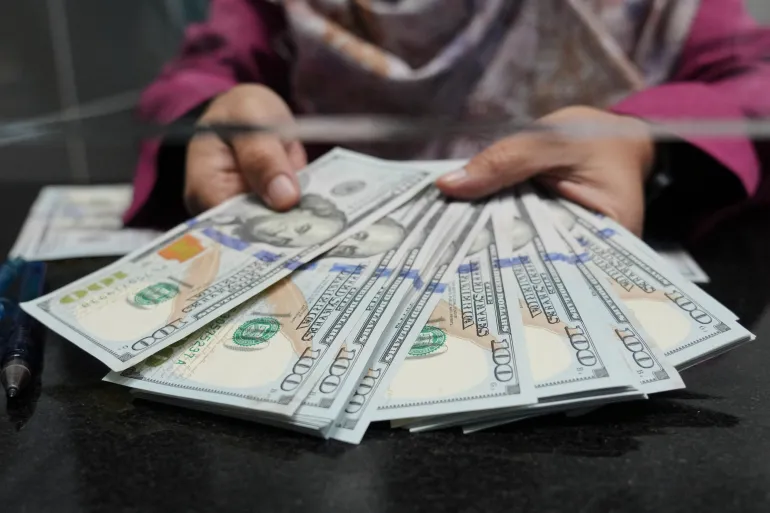
Argentina stands out globally for a unique economic phenomenon: the massive amount of U.S. dollars held by citizens outside the formal financial system. According to recent data presented by Vladimir Werning, vice president of the Central Bank of the Argentine Republic (BCRA), Argentina ranks as the second country in the world with the highest volume of cash and deposits outside its financial system, trailing only Russia.
The total amount of dollars held outside Argentina’s banking system is estimated at around USD 250 billion, a figure that surpasses similar levels in major economies such as Germany, United Kingdom, France, and Italy. This enormous pool of savings—often referred to locally as “dollars under the mattress”—reflects decades of economic instability and distrust in financial institutions.
A Global Comparison
The data were presented during the Kick Off Anual Inviu 2026 event on March 5, where Werning highlighted the unusual position of Argentina in the global financial landscape. Based on figures from the International Monetary Fund (IMF), Russia leads the ranking with roughly USD 400 billion held outside its banking system, followed by Argentina with about USD 250 billion.
Other countries, including Spain, Japan, Canada, Australia, and Mexico, show significantly lower levels of cash outside their banking sectors. In several nations such as Netherlands, Belgium, Denmark, and Austria, the figures remain well below USD 100 billion.
Government Strategy: The Fiscal Innocence Law
The Argentine government hopes to bring part of these funds back into the formal economy. Economy Minister Luis Caputo has promoted a policy known as the Fiscal Innocence Law, designed to encourage residents to regularize undeclared dollars without facing retroactive penalties.
The initiative aims to provide legal certainty to individuals who deposit their savings into banks or other financial institutions. According to Caputo, the policy represents a “paradigm shift” intended to restore trust and encourage citizens to channel their dollars into productive investments.
Under the new rules, individuals who bring their funds into the financial system and adhere to the simplified income tax regime are protected from potential future investigations regarding the origin of the money. The regulation also allows funds to flow through brokerage firms (ALyCs), investment funds, and even crypto wallets, creating competition among financial channels.
Why Argentines Keep Dollars Outside the System
The tendency for Argentines to hold large amounts of cash outside banks has deep historical roots. Repeated financial crises, currency devaluations, and restrictions on foreign exchange transactions—often known locally as “cepo cambiario”—have encouraged people to buy and store U.S. dollars as a safeguard against inflation and economic uncertainty.
In many cases, these dollars were purchased in informal markets during periods when access to official foreign currency was restricted. As a result, many savers prefer to keep their assets outside the banking system.
Signs of Change in Deposits
Despite this long-standing trend, there are signs that recent policies may be slowly reversing the pattern. According to the BCRA presentation, foreign-currency deposits in Argentine banks have risen to USD 38.3 billion, reflecting a noticeable increase compared to previous years.
Two key milestones in this trend include the 2024 asset regularization program implemented during the first year of President Javier Milei’s administration and the new Fiscal Innocence framework introduced in 2026.
Official data indicate that the 2024 program allowed Argentine residents to repatriate USD 20.6 billion in cash, while total declared assets during the process reached USD 23.3 billion. These included bank accounts, brokerage accounts, foreign holdings, more than 14,800 properties, and 6,500 bank accounts abroad.
The Economic Challenge Ahead
The central challenge for Argentine policymakers is converting these vast informal savings into capital that can finance investment and stimulate domestic consumption. Authorities hope that stronger legal guarantees and a more stable macroeconomic environment will gradually reduce the population’s preference for holding physical dollars.
Whether Argentines will be willing to bring their hidden savings back into the formal financial system remains uncertain. However, with hundreds of billions of dollars potentially available, the outcome could play a crucial role in determining the country’s economic recovery in the coming years.