
The Renault Group has announced a new four-year strategic plan called “futuREady,” outlining the direction the automaker will take through 2030. The strategy is being led by the group’s new CEO, François Provost, who assumed leadership in July following the tenure of Luca de Meo.
The initiative encompasses all brands within the group—including Renault, Dacia, Alpine, and Mobilize—and builds upon the earlier Renaulution strategy, which focused on restoring financial balance and revitalizing the brand between 2021 and 2025.
Building on the “Renaulution” Era
According to Fabrice Cambolive, CEO of the Renault brand, the first phase of the Renaulution strategy concentrated primarily on Europe, where numerous product launches helped re-establish the brand’s momentum.
The second phase expanded into international markets, including Latin America. Recent launches such as the Kardian and Boreal helped strengthen Renault’s presence in the region despite economic volatility.
Cambolive acknowledged that Latin America experienced an unstable economic cycle during this period. However, he noted that Renault still managed to increase market share and maintain profitability, suggesting that the strategy is producing positive results despite changing global conditions.
Ambitious Targets for 2030
The futuREady plan sets an ambitious production target of two million vehicles annually by 2030. The company aims to split this output evenly between Europe and international markets.
Electrification is central to the strategy. In Europe, Renault plans for 100% of its vehicles to be electrified, with half being hybrids and half fully electric. Outside Europe, the mix will be different, with 50% electrified vehicles and 50% internal combustion models.
The company is also focusing on several core pillars for future vehicles:
- Greater electrification, including hybrid solutions for regions such as Latin America
- Human-centered connectivity technologies
- Interior design that maximizes space and comfort
One example of this direction is the new Renault Clio, presented at IAA Mobility in Munich. The hybrid model illustrates the brand’s transition toward full electrification in Europe by the end of the decade.
Regional Strategies and Partnerships
The automaker has divided its international expansion strategy into two main clusters: an “extended Europe” region (including Morocco and Turkey) and a group combining Latin America, India, and South Korea.
Each region will play a distinct role. South Korea is positioned as a hub for advanced segments and connectivity, where Renault has partnered with Geely to develop models such as the Gran Koleos and Filante.
In India, Renault is developing new vehicles based on its modular platform, including the Bridger multi-energy SUV concept. Meanwhile, in Latin America the company is focusing on regional synergies while tailoring products to local markets.
Brazil is a key element of this strategy. Renault and Geely will cooperate more closely there, sharing production assets and potentially exporting vehicles to other Mercosur markets, including Argentina.
Expanding Through Strategic Alliances
Cambolive emphasized that partnerships have become an essential tool for efficiency in the automotive industry, particularly as electrification accelerates and regulatory environments evolve.
Renault’s collaboration with Geely goes beyond Brazil. Both companies, together with Saudi Aramco, are partners in Horse, a venture dedicated to producing highly efficient and low-emission internal combustion engines.
The group has also pursued partnerships with other automakers. For example, Ford Motor Company is using Renault’s small electric-vehicle platform in Europe, while Renault collaborates with Nissan Motor Corporation on manufacturing initiatives in India and France.
Despite these alliances, Cambolive stressed the importance of maintaining technological independence through Renault’s own platforms and engineering capabilities.
Argentina’s Strategic Role
Argentina remains an important market within Renault’s global plans. The company is transforming its Santa Isabel plant into a regional hub for light commercial vehicles.
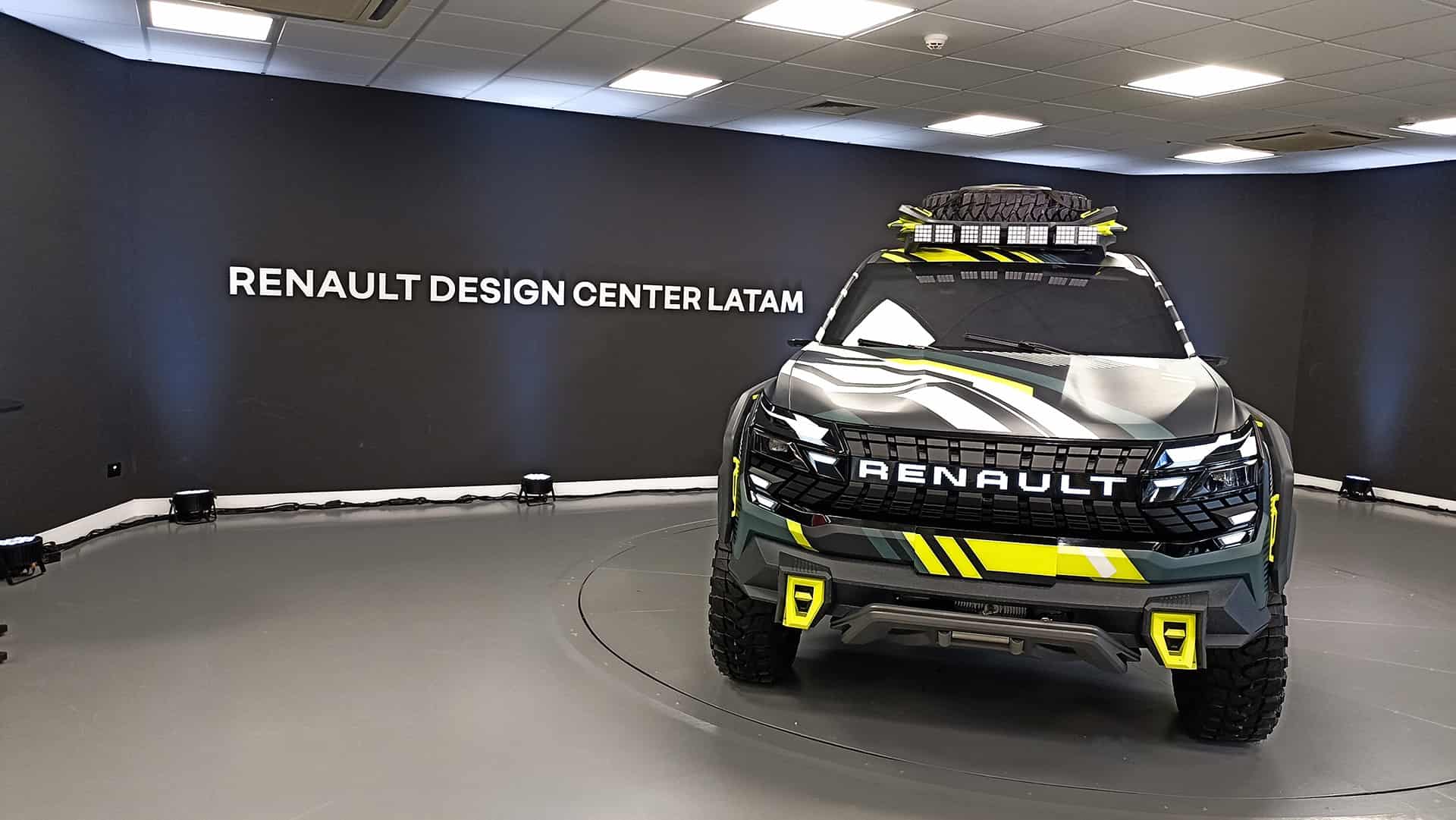
A key upcoming project is the production of a new half-ton pickup based on the Niagara Concept, which will be built in Argentina and exported to regional markets, including Brazil, Colombia, and Mexico. Renault is also exploring opportunities in the light commercial vehicle segment with the next generation of the Renault Kangoo.
However, the company continues to express concern about the country’s tax structure for vehicle production. Cambolive indicated that lower taxes could improve competitiveness and allow the Santa Isabel plant to increase production volumes for export markets.
A Flexible Roadmap for a Changing Industry
Ultimately, Renault’s futuREady strategy reflects the rapidly evolving landscape of the global automotive industry. Rather than relying solely on scale, the company aims to remain agile, balancing partnerships with independent development while adapting to shifting regulations, technology trends, and geopolitical realities.
With **36 new models planned worldwide—26 under the Renault brand alone—**the group is positioning itself to compete in a future defined by electrification, connectivity, and regionalized production networks.