
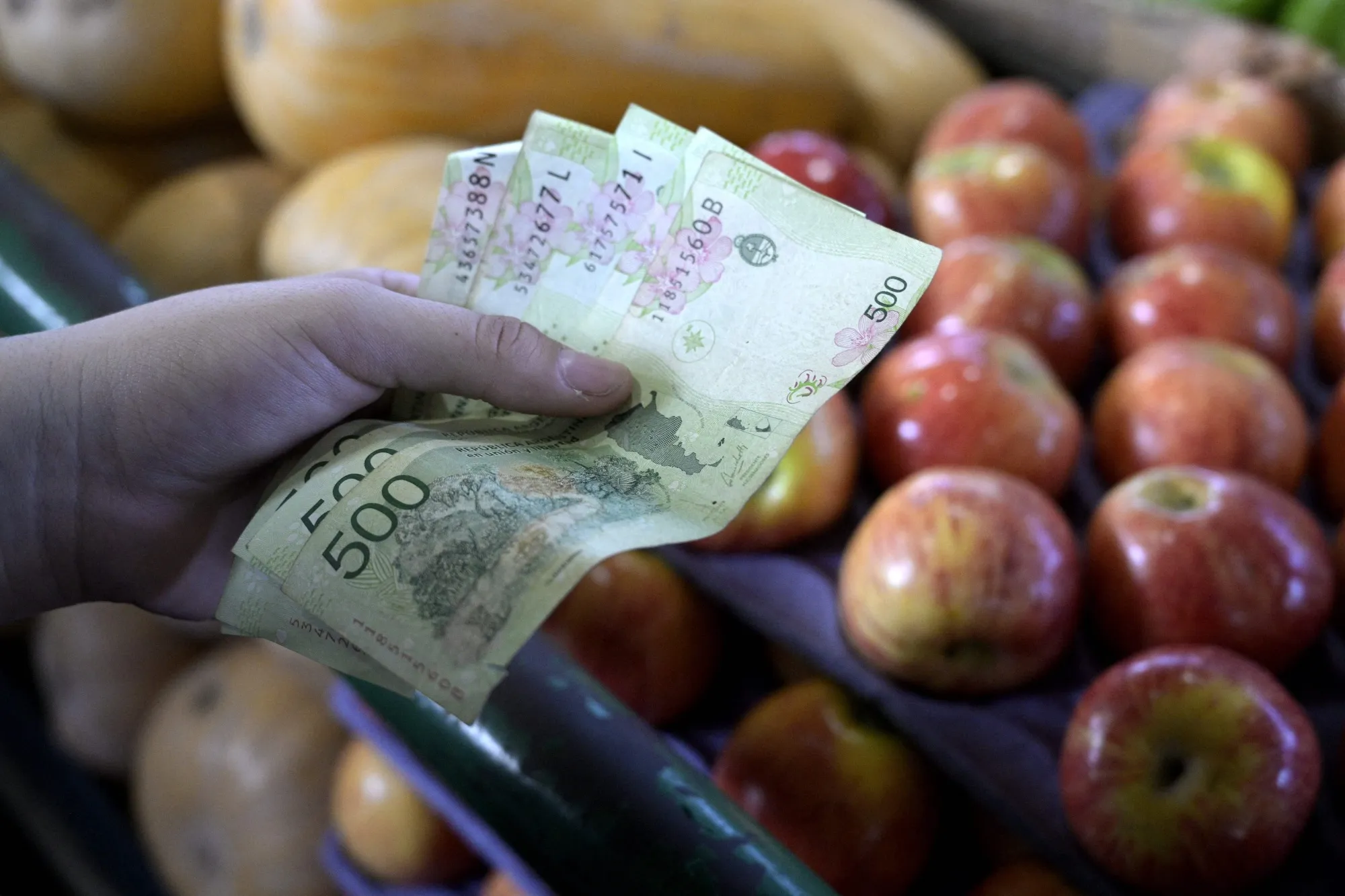
Inflation in Argentina picked up pace once again in February, highlighting the persistent economic challenges facing the country. According to the Instituto Nacional de Estadísticas y Censos (INDEC), the Consumer Price Index (CPI) rose by 2.9% in February 2026, bringing annual inflation to 33.1% over the past 12 months. The latest figure marks the sixth consecutive month in which inflation has exceeded 2% on a monthly basis.
The data came in slightly higher than analysts had predicted. In the most recent market expectations survey (REM) released by the Banco Central de la República Argentina (BCRA), economists had forecast a 2.7% increase for February.
Private consulting firms also anticipated a lower figure. Empiria Consultores, led by former economy minister Hernán Lacunza, estimated monthly inflation at 2.5%, while Econviews, headed by economist Miguel Kiguel, projected 2.4%.
Housing and Food Prices Lead Monthly Increase
Breaking down the February figures, the category with the largest monthly increase was Housing, water, electricity, gas and other fuels, which jumped 6.8%. This was followed by Food and non-alcoholic beverages and Miscellaneous goods and services, both rising 3.3%.
Other notable increases included:
- Restaurants and hotels: +3.0%
- Household equipment and maintenance: +2.6%
Meanwhile, the smallest price increases were recorded in:
- Alcoholic beverages and tobacco: +0.6%
- Clothing and footwear: 0.0%
From a broader perspective, regulated prices led the rise with a 4.3% increase, followed by core inflation at 3.1%. Seasonal prices, however, declined by 1.3%, partially offsetting the overall monthly increase.
Government Targets Lower Inflation
Despite the continued inflationary pressure, the government of President Javier Milei maintains its goal of pushing monthly inflation closer to 0% by mid-2026. However, economists remain divided about how quickly that target can be achieved.
According to the BCRA survey, which compiled forecasts from 40 financial institutions, inflation could drop to around 1.5% monthly by August 2026. The same survey projects that Argentina’s annual inflation will end 2026 at 26.1%, about 3.5 percentage points higher than previous forecasts. At the same time, analysts expect the Argentine economy to grow by 3.4% by the end of the year.
Controversy Surrounding the Latest Data
The release of February’s inflation data comes amid institutional changes at INDEC and controversy over how inflation is measured.
In January, economist Marco Lavagna resigned as head of the statistics agency after six years in the position. His departure occurred during a period of tensions with the government following the decision to delay the implementation of a new methodology for calculating the CPI.
The proposed methodology, based on the 2017–2018 National Household Expenditure Survey, was designed to update the consumption basket currently used to calculate inflation, which is still based on data from 2004–2005. The update would have increased the weight of categories such as housing, utilities, and energy, while slightly reducing the relative importance of food prices.
However, the government decided to postpone the change, arguing for further review.
While Lavagna did not publicly specify the reasons for his resignation—union sources suggested it was linked to wage freezes within the agency—government officials indicated the departure was primarily due to disagreements over the timeline for implementing the new methodology.
Interim Leadership at INDEC
Following Lavagna’s exit, the government appointed Pedro Ignacio Lines as interim director of INDEC. Lines previously served as the agency’s technical director in 2018 and played a key role in coordinating the evaluation of Argentina’s statistical system conducted by the Organisation for Economic Co-operation and Development (OECD) between 2018 and 2019.
As Argentina continues to battle persistent inflation, upcoming data releases will be closely watched by investors, policymakers, and households alike. The trajectory of prices in the coming months will play a crucial role in determining whether the government’s ambitious disinflation strategy can deliver the stability it promises.